
SimoneRenzi
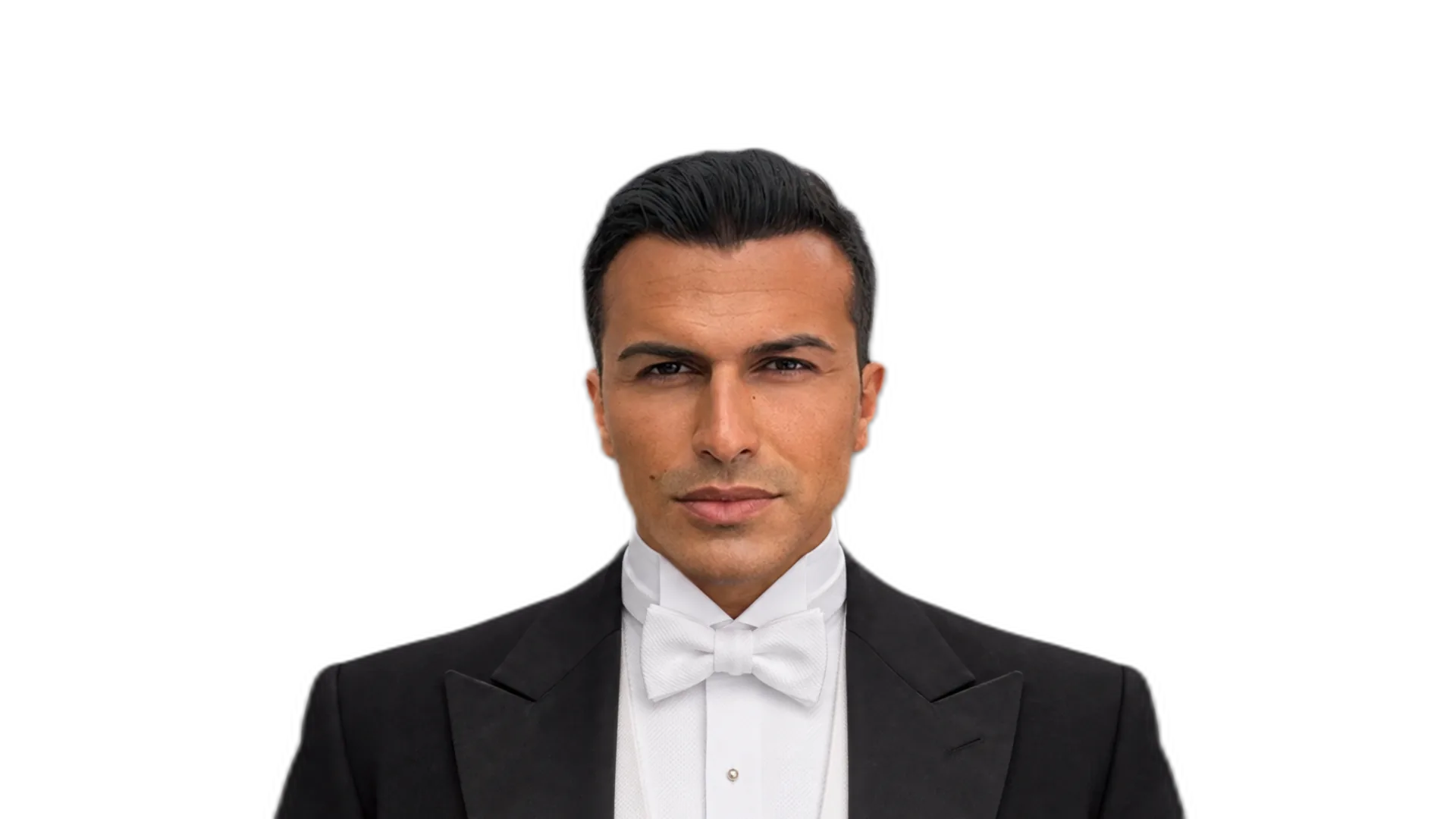
II · Piano
Classical pianist / Sound engineerConcerts, advanced studies and recordings, from Mozart to Rachmaninoff.
II · Piano
Classical pianist / Sound engineerConcerts, advanced studies and recordings, from Mozart to Rachmaninoff.
Piano tradition, concert activity and interpretive research: a path nurtured since childhood, built on technical rigour and listening.
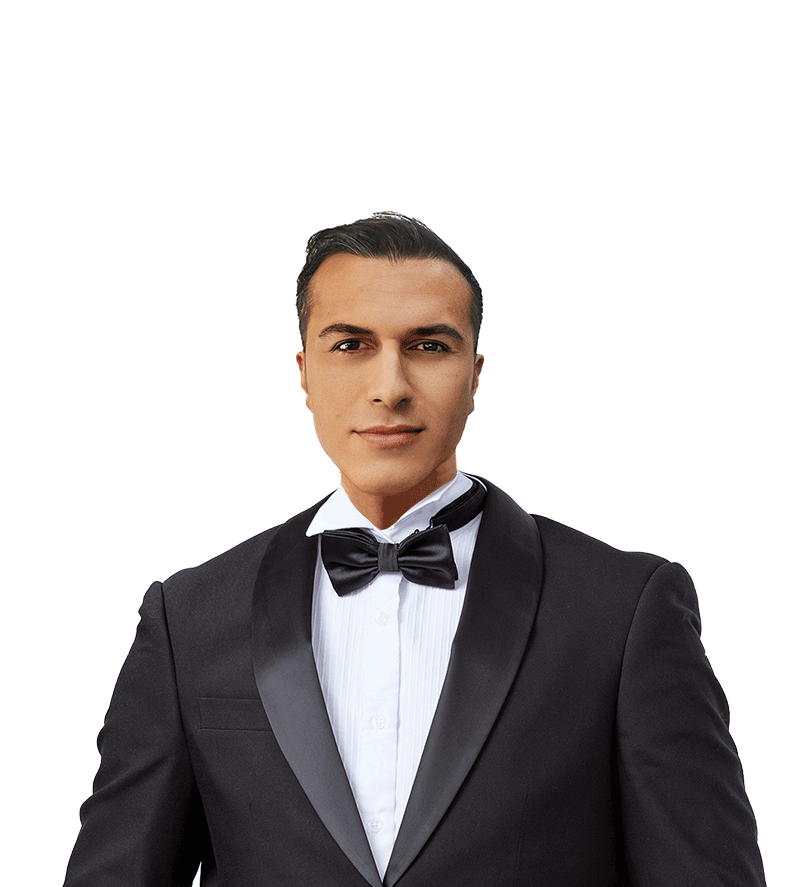
Born in 1982, he began studying the piano at the age of 9 under M° Fabio Salustri and earned his master’s degree in classical piano at the Conservatory with the highest mark of his session.
At 13 he began his concert career with a repertoire built on Chopin’s Mazurkas, Waltzes, Impromptus and Nocturnes and on Mozart’s Sonatas. From the age of 11 he took part in international piano competitions, always ranking among the top places. In 1996 he was the overall winner of his category at the international competition "Una città per la musica".
After graduating he devoted himself to performing, in solo recitals and alongside M° Paolo Ferrarelli, with a repertoire ranging from Chopin, Liszt, Beethoven and Mozart to Rachmaninoff and Bartók.
He recorded, for the first time in Italy, Mozart’s piano concertos K. 37, K. 466 and K. 488 with a digital orchestra, and took advanced courses with the internationally renowned pianist Massimiliano Ferrati.
In the hall
Playing in front of an audience takes far more than technique. Many pianists live for years with stage fright, and it all gathers in the moments before the first note. What if memory broke off halfway through the piece? What if a note came out wrong, the tempo slipped away, or hands still cold failed to respond in the fastest passages?
In those moments there is only one task, and it is an inner one. Remembering the hours of practice and every passage studied in depth, trusting a memory that is visual, muscular and harmonic all at once. Breathing deeply to find clarity again and stop the hands from trembling. Silently singing the opening bars, to feel the right tempo before even touching the keyboard.
Then the first note comes, and the music does the rest. It opens the door to its own world, and from that moment one listener or a million make no difference at all.
From the stalls
The piece that follows was recorded by Simone Renzi: no synthetic sound, only his own interpretation, to be heard in full.
Chopin · Ballade No. 4, Op. 52
The score follows Simone Renzi’s performance and every key goes down on its note.
The concert
The piano goes back to where music is listened to: in front of an audience.

Wolfgang Amadeus MozartConcerto for piano
and orchestra.
The catalogueIn D minor,
K.466.
Third movementRondo.
Allegro assai.
In concertNow really
listen to it.
After graduating, advanced piano training with M° Massimiliano Ferrati: masterclasses in Ravenna (Chopin — Ballade in F minor), Rome (Chopin — Études Op. 10; Fantaisie-Impromptu Op. 66 and Ballade No. 1 in G minor) and Genzano (Mozart sonatas for four hands).
Masterclasses and auditions with maestros Fausto Di Cesare (Santa Cecilia Conservatory), Camillo Righini (RAI music critic) and Paolo Ferrarelli, with whom he began a four-hand concert partnership — Mozart sonatas, Brahms’s Hungarian Dances, Schubert’s Fantasia Op. 103.
A university thesis at the crossroads of computing and music: a sample library for the Kontakt/KSP engine, distributed for free with almost 1,000 downloads in its first month. Since 2008 he has run Pianoconcerto.it, a community for academics and enthusiasts.
His recordings are often requested for independent video productions, such as documentaries and short films. Among them is the documentary "When the world came to San Francisco" by Hollywood director R. Christian Anderson: a small independent production, featuring Jerry O’Brien, whose soundtrack uses Mozart’s Concerto K. 466 and Debussy’s First Arabesque.
A selection grouped by ensemble, from the solo repertoire to the dialogue with the orchestra and four-hand chamber work.
Gallery


From the piano to sound
In the Preludes published in 1839, Chopin fits a C-minor chorale into thirteen bars. More than a century and a half later, the same sequence of chords carries a song by Adriano Celentano. Instruments have changed, and so have the ways we record and listen, yet the road to new music still runs through here, through what someone had already discovered.
Chopin · Prelude Op. 28 No. 20 · chorale transposed from C minor to B-flat minor
The new does not erase the old.
It builds on it.
Sound engineering
Technology has taken music into a world Chopin probably could not have imagined, made of digital signals, algorithms and recording studios contained in a computer. Yet every step forward rests on everything already known, from the physics of acoustics to instruments and the theory of harmony. This is the idea behind Simone Renzi’s work as a sound engineer: knowing tradition in depth in order to build something new on top of it. The transition you have just heard is a clear example, and far from rare in the history of music: two pieces more than a century and a half apart, brought into the same key and the same tempo, chord by chord. The aesthetics change, Chopin’s language remains, still speaking and untouched by time.
Adriano Celentano · Ti penso e cambia il mondo (excerpt)
Sound engineering
Alongside the piano, Simone Renzi has followed a second path, that of the recording studio. His degree in Sound Engineering gave him the method; the years spent among microphones, consoles and mixing sessions gave him the craft.
2012 · Forum Sport Center, Rome
Durante lo stage presso Sounding Studio, Simone Renzi partecipa come assistente alla registrazione dell'Orchestra di Sanremo diretta dal maestro Peppe Vessicchio. L'orchestra suona nell'auditorium del Forum Sport Center di Roma, la regia lavora al piano superiore: i musicisti non la vedono, ma ogni loro respiro arriva al banco. In quelle sessioni vengono registrati tutti gli stacchi musicali.


Recording an orchestra means keeping dozens of microphones open at the same moment, following the score bar by bar and giving every musician, in their headphones, the balance they need to play. Teamwork, in Simone Ciammarughi's studio, in constant dialogue with the podium.

“One of the most humane and approachable people I have ever met. Within five minutes we were talking about musical philology, as if we had known each other for years. He was convinced that each of us carries within an idea of the shape of the right sound.”
The method
In the studio every choice rests on solid ground: room acoustics, the behaviour of microphones, digital signal processing. They are technical tools serving one purpose only, to give the listener what happened in front of the microphones, adding nothing and taking nothing away.


On both sides of the glass
Being both a pianist and a sound engineer means knowing both sides of the glass. In the live room Simone Renzi knows what a musician feels when the red light comes on; in the control room he knows what to look for in a performance and how to respect it, without bending it to technique. It is where the two halves of his path meet.
The tools
Recording, mixing and mastering go through Pro Tools, the standard of professional studios. Writing and production take shape in Logic instead, where an idea at the piano becomes an arrangement, takes on its sounds and reaches the final form of a track.
Short films and sound design
The studio opens up to independent cinema. For short films by independent filmmakers, Simone Renzi handles audio production and sound design: ambiences, noises and silences, everything the viewer does not notice but that makes an image believable.
Oggi no
Short film presented at the Giffoni Film Festival · 2014
For Oggi no the production delivered only the pictures, with no sound at all. Everything you hear was built in the studio by Simone Renzi: the ambiences, every sound effect and the dialogue dubbing.
Oggi no · excerpt · ambiences, sound effects and dubbing by Simone Renzi
Music for pictures
Independent filmmakers and animators often write to Simone Renzi asking to use his performances in their work. Here are two examples, very different from each other.
DropArt
In Monika Rogalska’s animated short film, Debussy’s Clair de lune as performed by Simone Renzi accompanies the whole story, from the first shot to the last.

Documentary · 2015
When the World Came to San Francisco
For his independent documentary, director R. Christian Anderson chose Simone Renzi’s recordings of Mozart’s piano concertos.
Mozart · Piano concertos